
Engine specs explained
What displacement, cylinders, 2-stroke vs 4-stroke, fuel system and rated power really tell you about a machine.
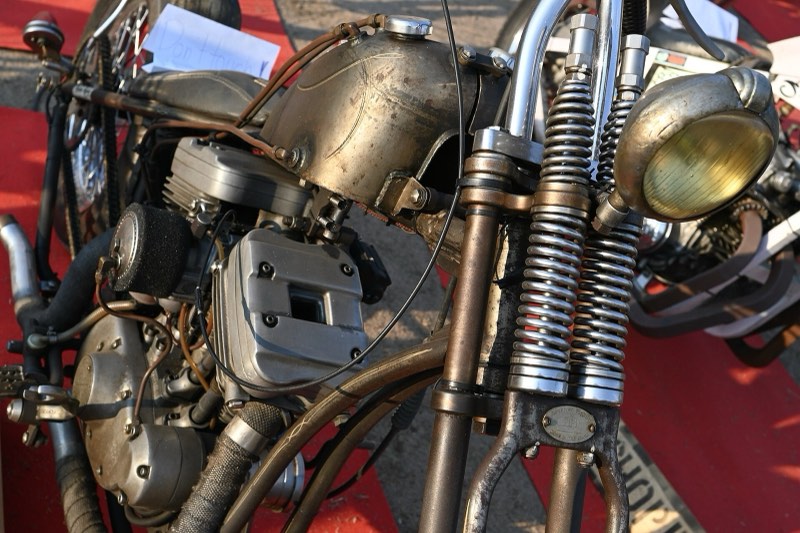
Engine figures are the core of every model page. Here is how to read them, and what they do and don’t tell you.
Displacement (cc)
Displacement is the total swept volume of the cylinders in cubic centimetres. It sets the rough class of a machine (a 125 cc scooter versus a 1,800 cc tourer) and is also how U.S. emissions classes are divided for street motorcycles: under 50 cc, 50–169 cc, 170–279 cc, and 280 cc and above.
Cylinders and layout
Singles are simple and light, twins (parallel or V) trade smoothness for character, and triples and fours rev higher. Where our data includes it, the chassis section also shows the engine layout (for example, V-shaped or in-line) and the valvetrain (SOHC or DOHC).
2-stroke vs 4-stroke
Two-stroke engines fire every revolution and are light and punchy, but mix oil with fuel. Four-strokes fire every other revolution, have separate oil, and dominate modern road and utility machines. This affects oil type, spark plugs and service intervals.
Fuel system
Carburetted machines meter fuel mechanically; fuel-injected machines use an electronic system (sequential, multi-point or throttle-body). Injection changes which sensors, pumps and filters a machine needs.
Rated power and torque
Where shown, rated power and torque come from the specific vehicle the manufacturer submitted for emissions testing, or from the manufacturer’s own specification sheet. Different trims, markets and measuring methods give different numbers, so treat them as a reference, not a guarantee.